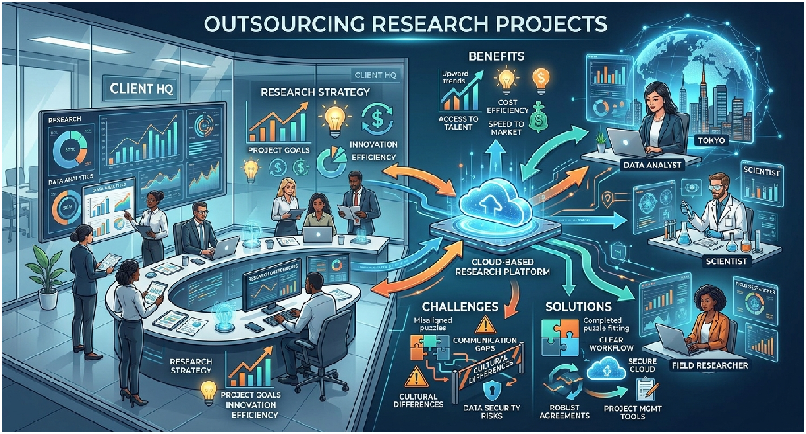
Outsourcing Research Projects: Benefits, Challenges, and Solutions
In today’s fast-paced and competitive world, outsourcing research projects has become a key strategy for universities, research institutions, and businesses. Delegating a portion of the Research and Development (R&D) process to external experts not only saves resources but also opens new doors of innovation for organizations. In this article, we comprehensively explore the benefits, challenges, and solutions for successful research outsourcing.
Benefits of Outsourcing Research Projects
Why do organizations outsource their research? There are several compelling reasons for this strategic choice:
- Cost Reduction: Hiring full-time researchers, procuring lab equipment, and purchasing specialized software is expensive. Outsourcing allows you to pay only for the required results and services.
- Access to Global Expertise: Sometimes the specific skills required for a project are not available in-house. Outsourcing breaks down geographical boundaries, enabling you to collaborate with top scientists and analysts worldwide.
- Focus on Core Business: By delegating research to external teams, internal managers and staff can concentrate on the organization’s key strategic goals.
- Faster Project Turnaround: Specialized research teams, equipped with extensive experience and the right tools, can complete projects much faster.
Challenges of Research Outsourcing
Despite its many advantages, this process is not without its hurdles. Recognizing these obstacles is essential for proper project management:
- Data Security and Confidentiality: Sharing sensitive data and innovative ideas with external parties carries the risk of intellectual property theft.
- Quality Control: Since the research team is not in-house, direct supervision of the workflow and ensuring the quality of the deliverables becomes more difficult.
- Communication Barriers: Differences in time zones, languages, and corporate cultures can lead to misunderstandings and project delays.
Solutions for Successful Outsourcing
To overcome the aforementioned challenges and maximize the benefits of research outsourcing, the following practices are essential:
1. Drafting Clear Contracts and NDAs
Before beginning any collaboration, a Non-Disclosure Agreement (NDA) must be drafted and signed. Furthermore, the intellectual property (IP) rights to the research outcomes must be explicitly detailed in the contract.
2. Careful Selection of Research Partners
Thoroughly investigate the background of the researcher or research institution. Requesting portfolios, reviewing their previous publications, and checking references from past clients will provide valuable insights.
3. Defining Key Performance Indicators (KPIs)
Establish project goals, delivery timelines for various phases (milestones), and quality standards from day one. This makes it easier to evaluate the external team’s performance.
4. Continuous and Effective Communication
Schedule regular weekly or bi-weekly online meetings to stay informed about the project’s progress and to quickly correct any potential deviations.
Conclusion
Outsourcing research projects is a double-edged sword; if executed with awareness and the right strategy, it can become a catalyst for growth, cost reduction, and innovation. Through proper contract management, choosing the right research partner, and maintaining effective communication, organizations can overcome the challenges and successfully achieve their research objectives.